
USBCAN-I-BC | USB-CAN Converter Module
Product No.: USBCAN-I-BC
The Tittron USBCAN-I-BC USB-CAN Converter serves engineers, technicians, students and hobbyists who need to connect USB hosts to a CAN bus network for testing, debugging and data acquisition. It addresses common challenges such as ground-loop noise, voltage surge hazards, and the shortage of simple USB‑to‑CAN bridging hardware for bench and field deployment.
Buyer login — pricing, stock and order history
Incoterms® 2020 Applies to all Tittron B2B orders.
Overview — USBCAN-I-BC | USB-CAN Converter Module
The Tittron USBCAN-I-BC USB-CAN Converter serves engineers, technicians, students and hobbyists who need to connect USB hosts to a CAN bus network for testing, debugging and data acquisition. It addresses common challenges such as ground-loop noise, voltage surge hazards, and the shortage of simple USB‑to‑CAN bridging hardware for bench and field deployment.
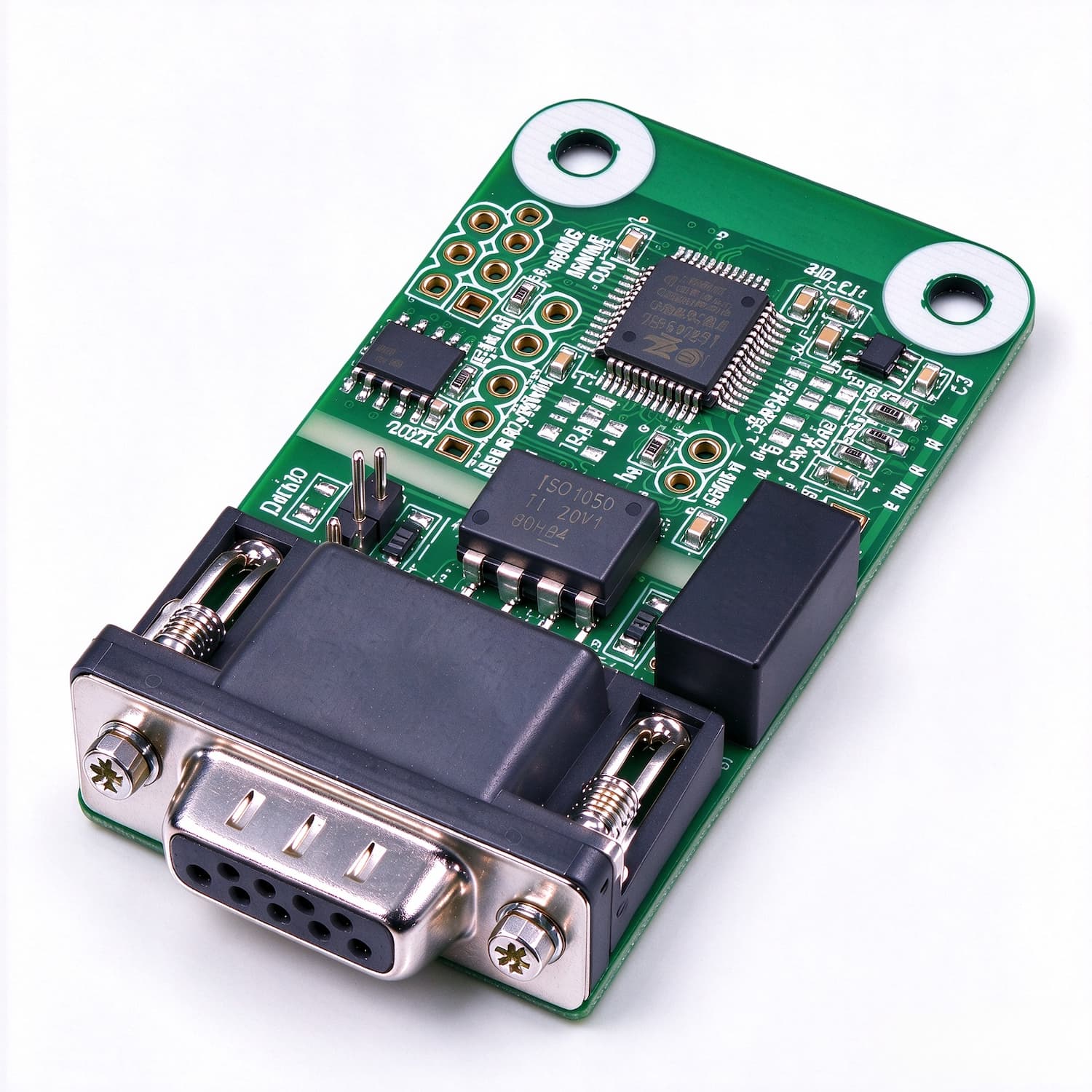
It is a plug-and-play, USB bus-powered bidirectional USB-to-CAN interface that enables stable long-distance communication between a USB host and the CAN bus. The module supports bidirectional transmission of CAN frames encapsulated within USB packets. With compatible host software, users can transmit CAN messages, monitor raw CAN bus traffic and log bus data. Integrated galvanic isolation separates the USB side from the CAN side, protecting the host device against ground-loop interference and voltage surges. A jumper-selectable 120 Ω termination resistor accommodates different CAN bus topologies.
Typical applications include commissioning and debugging industrial controllers, automotive CAN communication testing, BMS development and validation, robot actuator commissioning, CAN bus data logging, CAN protocol training, and developing Raspberry Pi‑based CAN gateways or data acquisition nodes. Its compact form factor suits both bench testing and on-site service.
What stands out — USBCAN-I-BC | USB-CAN Converter Module
■ Compatible with Raspberry Pi Zero (W), Pi 3B+, Pi 4, BeagleBone, Tinker Board and other single‑board computers
■ Plug‑and‑play, USB bus‑powered; no external power supply needed
■ Software‑configurable CAN baud rate: 20 kbps ~ 1 Mbps
■ Onboard STM32F0 (48 MHz) MCU with DMA for high‑speed data transfer
■ Supports CAN 2.0A (standard frame) / CAN 2.0B (extended frame)
■ TI ISO1050DUBR isolated CAN transceiver; galvanic isolation, surge and ESD protection
■ Jumper‑selectable 120 Ω CAN termination resistor
■ SocketCAN compatible; C & Python demo codes supplied
■ Cross‑platform API for Windows, macOS, Linux; Python supported
■ User manual and technical support included
Important Notes
- Connect the Micro USB cable to your host. Connect the 9-pin D-SUB to your CAN bus. Select the 120 Ω termination resistor via jumper if required by your bus topology. Use compatible SocketCAN software or provided API to send, receive and log CAN frames.
- This module is a USB-CAN bridge, not a standalone protocol analyzer. All CAN frame parsing and analysis rely on host-side software. Confirm bus termination and baud rate match your target CAN device before powering up.
Technical specifications — USBCAN-I-BC | USB-CAN Converter Module
- Core Hardware
- Chipsets
- STM32F072CBT6 + ISO1050DUBR
- Firmware Reference
- candleLight / Canable open-source firmware
- Model
- USBCAN-I-BC
- Product Type
- USB‑CAN Converter
- Interface & CAN
- USB Interface
- USB 2.0 Full‑Speed, Micro USB
- CAN Interface
- 9‑pin D‑SUB
- CAN Standard
- CAN 2.0A (standard frame), CAN 2.0B (extended frame), ISO 11898‑2 High‑Speed CAN
- Baud Rate
- 20 kbps ~ 1 Mbps, software configurable
- Main MCU
- STM32F072CBT6 (48 MHz), DMA supported
- CAN Transceiver
- ISO1050DUBR (Texas Instruments, isolated)
- Isolation Rating
- 1.5 kVDC / 1 min; 3 kVDC / 1 s
- Termination Resistor
- 120 Ω, jumper selectable
- Protection
- Surge protection, ESD protection
- Power, Software & Mechanical
- Power Supply
- USB bus‑powered, no external power required
- Supported Host OS
- Windows, macOS, Linux (SocketCAN compatible)
- SBC Compatibility
- Raspberry Pi Zero (W), Pi 3B+, Pi 4, BeagleBone, Tinker Board and other SBCs
- Operating Temperature
- -40 ℃ ~ +85 ℃
- Relative Humidity
- 15% ~ 90%, non‑condensing
- PCBA Dimensions (L × W × H)
- 56.50 mm × 31.20 mm × 14.20 mm
- Weight
- 15.5 g
DOWNLOAD — USBCAN-I-BC | USB-CAN Converter Module
Datasheets, drivers and firmware for this model. Files open in a new tab.
Need a quotation or a private-label programme?
Send us the models, quantities and target market. We reply with pricing, lead time and certification details.